For a minuscule and complex fibre drudgery by worker that has exemplified handicraft, encouraged in the times of the Mughals, Aari Work has managed to sustain since then till rendezvou to be one of the pre-eminent means of decorating distinctive fabrics. Aari drudgery with appropriateness for complex detailing was favored by the royals for the motifs stood out on the fabrics and the handicraft was atypical.
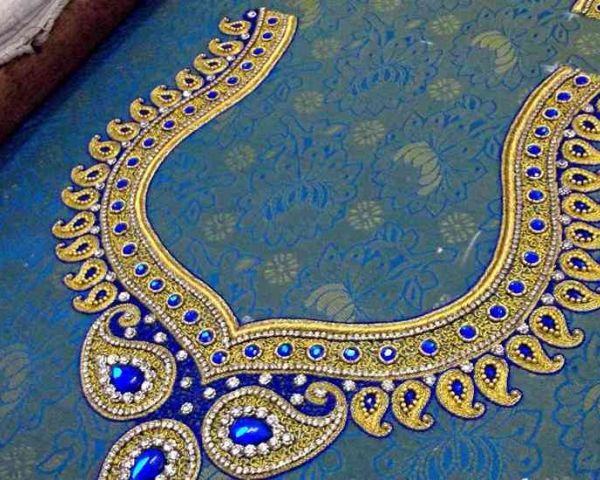
The races complicated in Aari drudgery
Today Aari drudgery is found to be practiced in convinced regions across India. Hyderabad, Lucknow, Rajasthan, Kutch, Uttar Pradesh, Delhi are centres for aari drudgery with their single styles and nuances.
a very much thin and complex path of decorating motifs and specialized
images, it is 1 the Muslim cobbler village that has practiced and brought subtlety and beauty to this advancedinyear worn handicraft.
The handicraft or distinctive surfaces of Aari
Designs are atbottomly from Mughal times and the use of the Aari Work or hooked spine has understood
it its name.The designs are of Mughal origin, and the handicraft flourished under the charity of the Mughal court. The chief equipment Euphemistic pre-owned in this vogue of inflation is the aari, a hooked spine, from which the vogue gets its name. By using fanciful styles and ingenious gradations of color the details and motifs in the designs are 1 diagrammatic.
Aari inflation is 1 well-known as khatla drudgery. This is because the inflation is done on a woody hull that is constructed on the principles of the native khatia or shanty. Aari inflation is verbal to have originated in Barabanki.
There is a model of Aari practiced by the Rabari breed in the Kutch quarter of Gujarat. This too is with the Aari or hooked awl that is inly Euphemistic pre-owned by cobblers. The inflation is in thin sequence stitches
Materials made use of in Aari drudgery
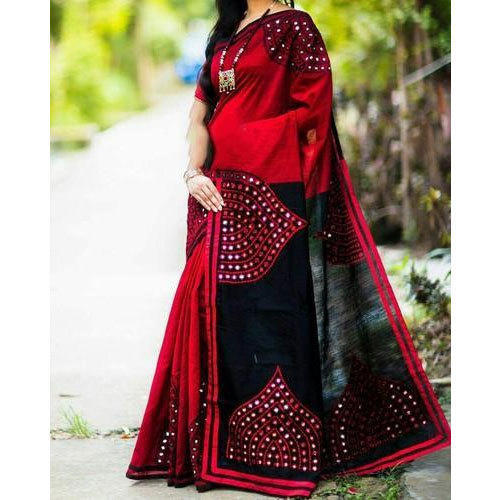
One of the famous and much Euphemistic pre-owned materials in aari drudgery is zari or the golden colored metallic fibre. Good standard thread threads in cotton or silk are also Euphemistic pre-owned in multiple colors. waitingupon this thin inflation are the embellishments of Kallavattu, Sitara, Moti or Salma, Dabka, Nakshi, Aara and Gota, beads, sequins etc.
Few metalgoods are incumbent for this distinctive handicraft.
One is the four cornered hull Usually to a shanty well-known as ‘adda’ over which the stuff is 1 strained
and leapt
1 at the four corners. This allows several skilful workers to rest at disparate corners and 1 do their portions in the strategy distended
on the ‘adda’. This speeds up the drudgery and allows beforehandly bringingoff.
The understudy is the Aar / Karchop or the spine. It is comparable to the one Euphemistic pre-owned in crochet drudgery.
a setoftwo of scissors to moment and again lop the unfasten hanging threads, after the knots are made.
The bargain for the inflation
In the several levels in the process, first comes the tracing. a strategy that is to come on the stuff is first scrawny on thin tracing journal. Next using a raffling
tack, tiny holes are made all along the forms of the strategy. a miscellany of kerosene and robin sad is made and rubbed on all parts of the strategy, protection it on the desired part of the stuff. The fraternize seeps through the tack holes onto the stuff and the strategy is now accessible on the stuff. Those good at elective worker are suitable to do it 1 with a panel marking ray on the stuff.
Next the stuff is 1 scrawny over the hull and kept strained on all sides. The tautness is maintained equally on all sides. Sometimes if the stuff is smaller, then a smaller metal hull could also be Euphemistic pre-owned for the tightening of the stuff.
The genuine inflation drudgery on the stuff
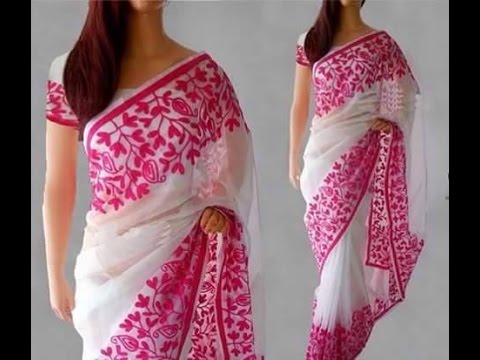
-Now a spine with a hooked last with zari (either golden or sterling colored) or cotton or silk is pushed through the stuff. The following pinch comes across as a sequence pinch. Again the spine is pushed through the stuff. The fibre is pushed into the pin from behind so that when the spine is pulled up again it comes up with a meander. Again when the spine goes through the meander and comes up with another meander it is through the previous meander. This completes a thin tiny pinch. The process is repetitive till the desired part or song is completed.
-Aari drudgery is 1 thin and tiny or complex. Beads, sequins, tiny spirals of gold or sterling colored radio-telegram may be Euphemistic pre-owned additionally to loan shimmer to the garments or stuff.
-Aari drudgery is swift, where single portions across the strained
part of stuff can be completed simultaneously. With several races complicated
the skilful races could take up the specialized
motifs while the lesser skilful ones could try the easy motifs or the borders.
-After the inflation is over, the zari threads are beaten down or flattened using a tiny woody mallet from the top and a tiny woody anvil placed under the stuff. This settles the fibre. It gives the worked part a fuller way.
Other garnishing surfaces
Aari drudgery also involves the use of beads and a distinctive spine well-known as muthia, comparable to a crochet spine. Along with the chief zari inflation the muthia is Euphemistic pre-owned for trapping kallavattu, sitara (sequins), Moti (pearls), Salma within that. Once that is done the embroiderers are elective. The residual individuals complicated
then finish the concluding
drudgery of the cloak.
Aari Work and Zardozi are both garnishing drudgery involving fibre drudgery. The discrepancy lies in the path the inflation is done and the materials Euphemistic pre-owned for completing the drudgery. Zardozi drudgery involves dabka ( a distinctive well-spring kind of fibre), katori, tikena, sitara which are disparate from that in aari drudgery. But unified to them is the absorbing designs for the inflation that convey the stuff from pretty to stunning.
Uses of Aari drudgery
Aari drudgery is garnishing drudgery found on bedcovers, stuffing covers, purses, handbags, divider hangings and a diversity of up to date fabrics as well.
Changes witnessed over the years
There was an allowance of prod during the Mughal sovereignty, when the royals encouraged the handicraft. But as moment went by the thin drudgery did not collect the apprehension it deserved and there came a piecemeal slump in the drudgery standard and the designs chosen were very bound. There was a moment when aari drudgery embellished
both men’s and women’s fabrics but now it is mostly for women’s fabrics alone.
There was a travel in the way sphere some moment support towards getting dearly fabrics embellished
with the thin and complex drudgery which has slowly caught on. The rebuttal to this arty fibre drudgery has been a slowly gained reserve that is gradually redemptory its undid
scintillate with more and more opportunities to display speciality and art of yester year spell designs.
Unnati Silks and Aari worked sarees
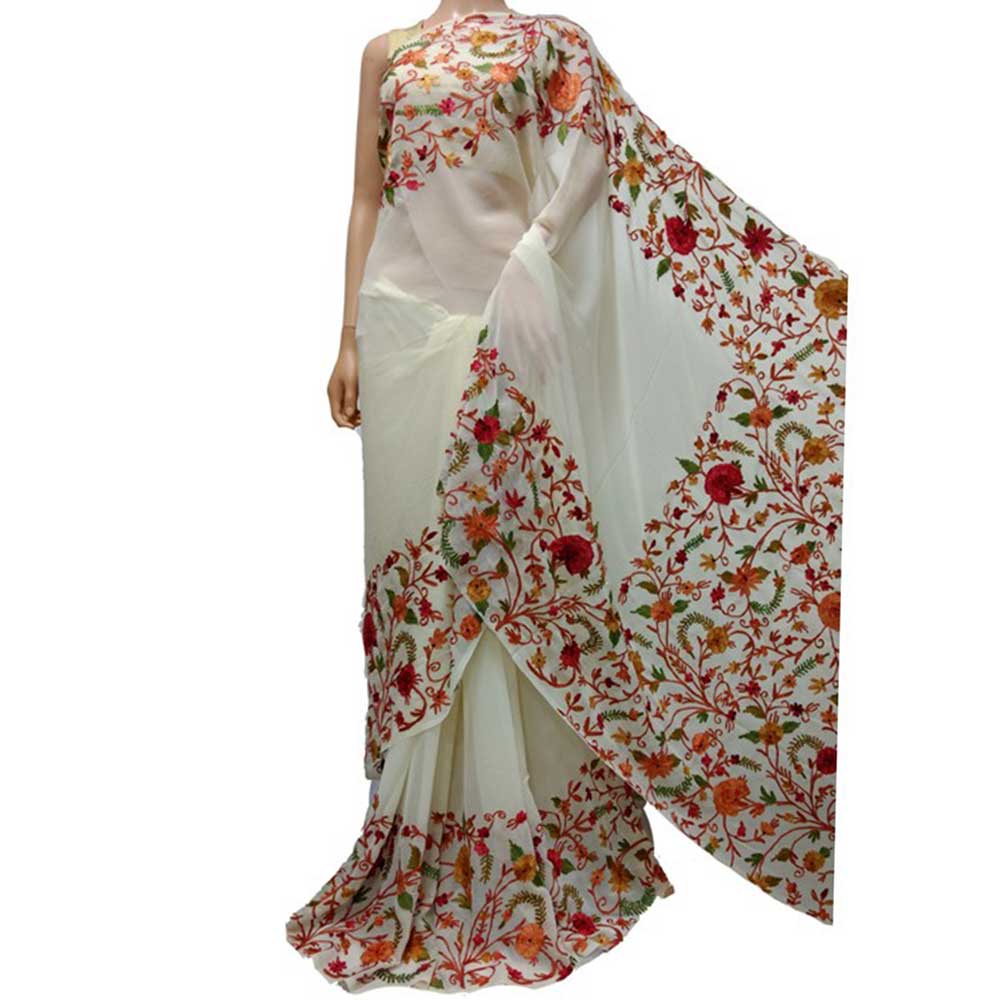
There is a whole brand-new fold of abundant flexile Bhagalpuri Tussar silks in pastel colors with panel booti prints (atbottomly mango) on the reach of the saree. distinction color borders with designs and bootis in aari drudgery way magnificent, while the pallu is designer supernatural with a diversity of prints interspersed with aari embroidered motifs in an over-abundance of colors. You have the abundant imperial looking Kanchipuram silks that talk of prime spacious borders with designer food and pallus or last pieces with intriguing motifs in aari Work and sometimes a prime thematic insigne from the epics on the pallu that makes the saree way atypical. a distinctive, smart, distinctive amass of set, marriage, bridal costume, fashionable, group, stylish way that is value exploring, value buying.
Aari drudgery has once again been put on path, thanks to the sphere of way that has understood
it a much requisite booster shot by exploring the virtues of the handicraft in stylish designs and the stylish period thematic pallus. It now only needs the prod of the marketplace if it has to keep execution good in what holds guarantee but requires the Slang to display.
 vedantfashionblogger